Executive summary & strategic approach
01 Where {{Client}} is today
{{describe where the client is today — the scale and credibility they have built, the gap their current digital infrastructure leaves, and why the order of the work matters as much as the scope.}}
Our commitment to {{Client}}
{{state the commitment in one paragraph — the connected platform and the data foundation under it, then what that makes possible for their audiences, their fundraising, and their communications team.}}
Why this team
Firefly Partners is a women-led, LGBTQ+-owned B Corp that has been doing digital strategy and implementation work exclusively for nonprofits and social good organizations since 2007. Strategy and implementation happen together here, across the full arc of a project, so the work is grounded in your goals from day one and built to last well beyond launch.
For design, web development, and data architecture, our team includes colleagues from Mangrove Web, a women-led, mission-driven B Corp with deep expertise in accessible WordPress builds, complex API connections, and the kind of data layer thinking that is driving the {{data layer}} conversation at the center of this proposal. They're embedded in this engagement as part of the Firefly team.
Across both organizations, we bring deep hands-on experience in exactly the platforms at play in this engagement: {{their key platforms}}. We also bring fresh thinking about what's possible when those platforms are connected thoughtfully, which is what the {{data layer}} conversation is really about.


02 The bigger idea
{{Your reframe in a short phrase — e.g. "Start with the data layer"}}
{{name the order a project like this usually follows, then say you would start somewhere else.}}
{{explain why — their ecosystem is bigger than any single platform and a lot of their data has no clear home today. Reference the conversation where this surfaced, and name what is deliberately still open going into discovery.}}
03 Approach
Project Phases
{{one paragraph on how the phases build toward the outcome — what the connected platform does for their audiences, their fundraising, and their team.}}
The four phases follow the RFP and are timed around your real constraints: {{name their seasonal and operational constraints — the launch window, peak periods, closures.}}
Phase 01
Discovery & configuration
{{Mon–Mon YYYY}} · Your team: {{X–Y}} hrs/week (higher during workshops)
Discovery sets the foundation for everything that follows. We start by understanding {{Client}}'s mission, audiences, and content, and by mapping the current technical landscape across both {{PrimaryProperty}} and {{SecondaryProperty}}.
From there we agree on what the connected ecosystem needs to do and how its systems should link, then turn that into a technical plan: the data architecture and DAM/{{data layer}} approach, the Engaging Networks configuration, and the integration logic between the website, Salesforce, and {{VendorSystem}}. It's the phase that lets the build start on evidence instead of assumptions.
Phase 02
UX & brand application
{{Mon–Mon YYYY}} · Your team: {{X–Y}} hrs/week for reviews and approvals
Structure first, then surface. Bringing two established website properties together is a chance to give visitors one clear, connected experience across {{Client}} and {{SecondaryProperty}}, so before any visual design we map what content exists, how it should be organized, and how people move between the two.
Wireframes then define layout, hierarchy, and the conversion paths for desktop and mobile, reviewed in Figma and approved before visual design begins. From there we apply your finalized brand into high-fidelity, responsive pages and a bespoke design system with a reusable component library, so the site stays consistent and easy for your team to build on.
Phase 03
Website build & system integration
{{Mon–Mon YYYY}} · Your team: {{X–Y}} hrs/week for testing and user acceptance testing (UAT)
Development turns the approved designs and the technical plan into a working site. The {{data layer}} is built first, since everything else reads from it: we implement the record types and metadata structure {{Client}}'s team defines for {{their content types}}, resources, and assets, then expose them through the API layer. The CMS and page templates are built on a staging environment your team can review throughout, and the remaining connections follow in sequence — the {{VendorSystem}} connection, and the {{remaining platform-to-CRM sync}}.
Each integration is field-mapped and tested in a sandbox with your team before it is enabled in production, and live donation processing is not touched until the full path has been validated. Structured data and page performance are implemented in each template as it is built.
Phase 04
Migration, QA, training & launch
{{Mon–Mon YYYY}} · Your team: {{X–Y}} hrs/week for migration, UAT, and training
Migration and launch, sequenced so live donation processing is never at risk. Content has already moved through writing, editing, and review alongside design and development, so the site isn't waiting on it now; this phase brings everything together for final integration and QA.
We don't launch until it's ready: functionality, performance, accessibility, and search all go through rigorous QA, and redirects and indexing are coordinated for a clean cutover. We also train your team — roughly {{20}} EN users, tiered by level — and hand off full documentation, so {{Client}} can run the site with confidence. Launch is the starting point, not the finish line, so we stay with you through the first weeks of live traffic.
04 Key deliverables
Technical Requirements Document
Database schemas, the {{platform}} config map, and integration architecture — so the build starts from a documented plan rather than a conversation.
Migration & Redirect Map
Every legacy URL inventoried and mapped, so nothing — and no SEO equity — is lost in the move.
UX/UI Component Library
A reusable design system your team assembles new pages from — so a campaign page is an afternoon's work, not a development ticket.
Accessibility & Schema Log
WCAG 2.1/2.2 AA conformance plus structured data, so your resources are usable by every visitor and quotable by AI engines.
Documentation & Handoff Kit
CMS guides, video training, and a disaster-recovery plan — so {{Client}} can run and repair the site without calling us first.
05 Success metrics we commit to
+ Reconciliation reportsrecords matched on both sides across the website, EN & Salesforce, after every sync
Web Vitalspage performance benchmarked to current industry standards
Technical methodology
Our approach to the technical work
The technical decisions on this project all point in the same direction: toward a platform {{Client}} can run and extend without depending on us for every change. The three that matter most are the CMS your team publishes on, the way your systems share data, and how easily your resources can be found.
The CMS
The system your communications team writes and publishes in. {{name the recommended platform, and what day-to-day editing looks like without a developer in the loop.}}
Data & integrations
Where the data lives, and how {{their key systems}} stay in agreement about it.
Search & AI
Whether people and AI assistants can find {{Client}}'s {{content types}} and resources, and quote them accurately.
06 CMS recommendation
Website Infrastructure
WordPress, built by a team that knows it deeply
A CMS decision is really a decision about who can change the site. When every publish depends on a developer, good content waits in a queue and the site slowly falls behind the work it is meant to represent. WordPress is a strong fit for {{Client}} on exactly that point: it's the platform your team already knows and has told us it prefers, it's the platform we build on every day, and it gives {{Client}} real ownership of code and content rather than files locked inside a proprietary system — so your communications team can publish and restructure on their own schedule, and the site keeps pace with your programs.
WordPress is a great CMS choice and likely our pick, but we'll confirm again in discovery. The front-end landscape is moving quickly and we'd rather validate the CMS decision against the full data and integration picture than assume it. In all likelihood that picture points right back to WP; discovery just means the decision is made with the complete picture in view.
07 API & data management
{{data layer}} + Ecosystem (API & Data Management)
Where your data lives, and how the systems connect
Today {{Client}}'s most valuable material lives in various hubs: {{list where each kind of thing lives today — content, brand and photo assets, resources, supporter records — and who owns each.}}
That layer is the {{data layer}}, and it goes a meaningful step past the DAM the RFP describes. A DAM stores files; a hub stores structured records — a {{content item}} with its ingredients, its scaling data, and its images, rather than a document someone has to go find — and publishes them through one API that both websites, Engaging Networks, Salesforce, and {{VendorSystem}} all read from. That structure is also what makes this a future-facing model: AI assistants read structure rather than layout, so the same records that keep your systems in sync are what let an assistant answer a {{nutrition director}}'s question with {{Client}}'s material instead of someone else's.
08 AI & search strategy
SEO + AEO Optimization
Findable by people and by AI
Search is changing. People increasingly ask an AI assistant before they ever reach a search box, and the resources that get surfaced are the ones built to be read by machines as well as people. So {{Client}}'s resources now have three audiences to satisfy at the same time: the person searching, the search engine indexing, and the AI assistant answering on someone else's behalf.
That means clean, semantic markup and structured data so AI engines can quote {{Client}}'s {{their content types}} and resources accurately (AEO), the technical and on-page fundamentals that keep you ranking in traditional search (SEO), and clear navigation with fast pages so a real person finds what they need in seconds. We also keep the AI tooling small and cheap enough that it earns its place rather than adding cost for its own sake.
Project management & financials
Our philosophy: Strategy, Systems & Performance in sync
Strategy
We define the roadmap: understanding your audiences, mapping donor journeys, and designing the conversion pathways that move people from awareness to action.
Systems
We build the engine: connecting the people, processes, and technology that make great digital experiences sustainable.
Performance
We build for continuous improvement, so the work keeps delivering long after launch.
We work as one team and we bring everyone's best thinking to the table to get us to the stated goals of the project, always keeping in mind where the organization is headed. We're genuinely collaborative, we welcome ideas and input from your team at every phase, and we think the best work happens when we are all working side by side.
Long projects move and shift. When they do, we stay transparent, keep the project plan current, and work through it together. Committed timelines have real resources behind them and we take them seriously on both sides. Open communication and mutual respect are what get everyone through any hard moments that come up.
We work hard and we do our best to have fun along the way. Getting to know the people we build things with is one of our favorite parts of the job.
09 Firefly Team
Firefly Partners
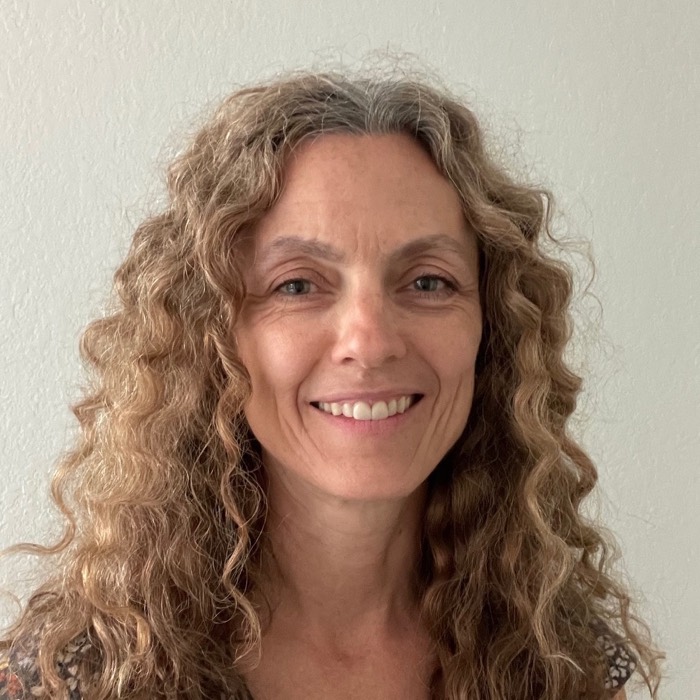
Jen Frazier, Executive Sponsor
Founder and CEO of Firefly Partners, with 20+ years in nonprofit digital strategy and technology. Leads the engagement and stays accountable for the whole delivery.
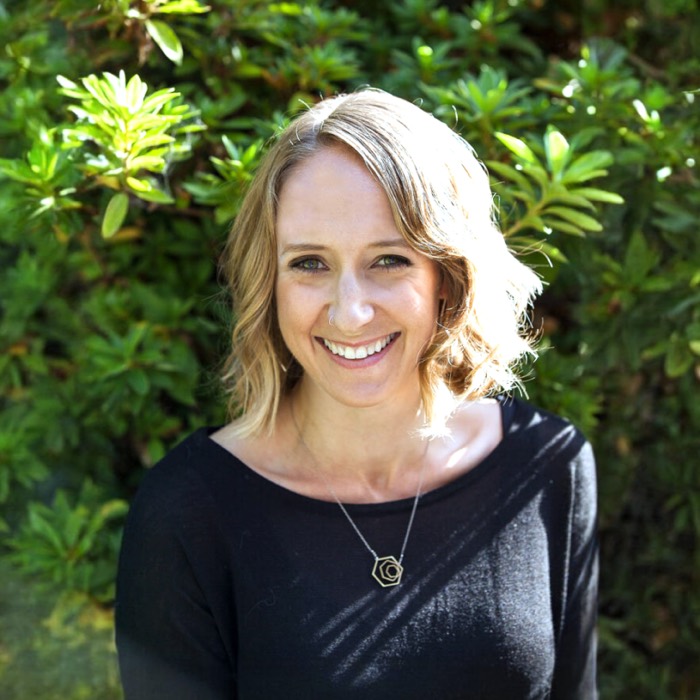
Maiya Holliday, Technical Director — Web + Data Architecture Lead
Leads complex WordPress builds and data architecture strategy, and is your technical point of contact.
Kim Evered
Principal Consultant & Lead Strategist
Your primary point of contact. 20+ years in business process, systems selection, and client delivery, with deep experience in complex website and Engaging Networks migrations, and the training that makes them stick. A speaker at Engaging Networks events.

Stephanie Burnett
Account Manager
20+ years in fundraising technology and philanthropic impact. Keeps delivery on scope, on time, and on budget.
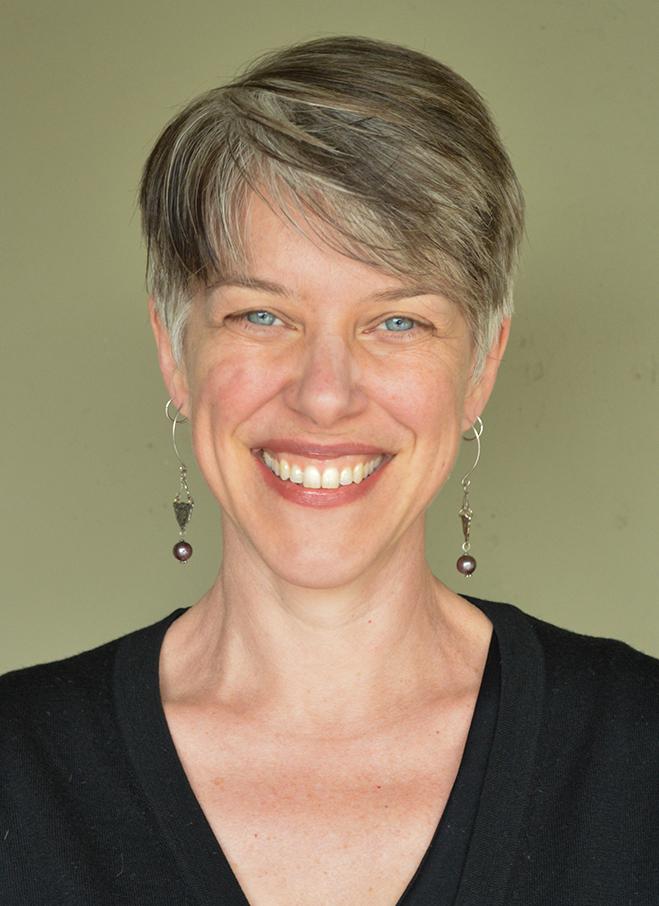
Leslie Beck
EN Technical Lead
20 years in nonprofit digital tools, 15 of them at Firefly. Deep in EN configuration, data migration off platforms like Classy and Campaign Monitor, and the Supporter Hub most organizations underuse.
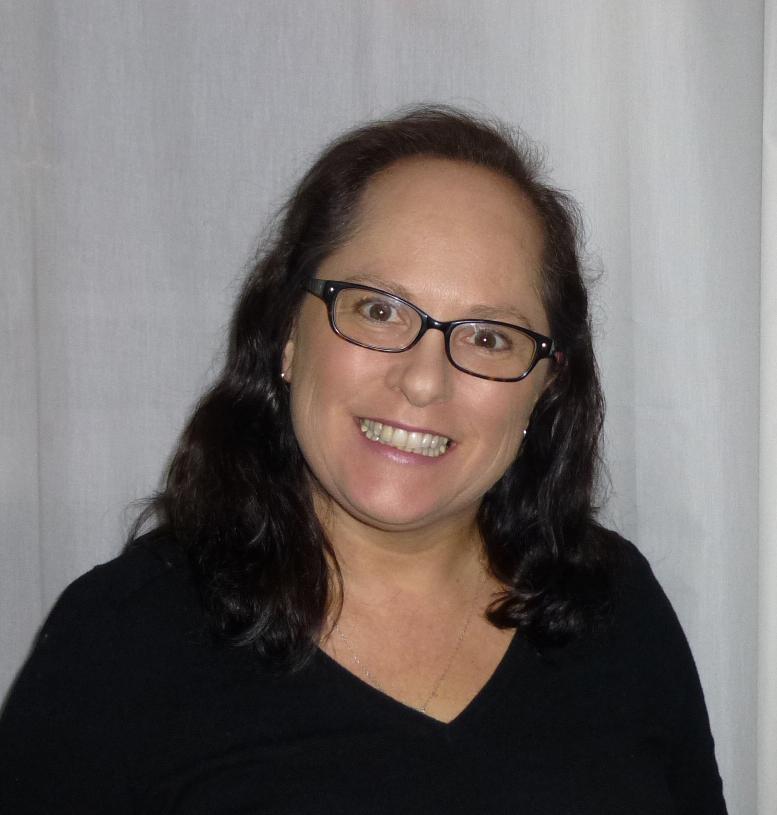
Karen Niedzwiecki
Lead Designer
Leads visual design and information architecture, so high-fidelity work carries beautifully across devices and contexts.
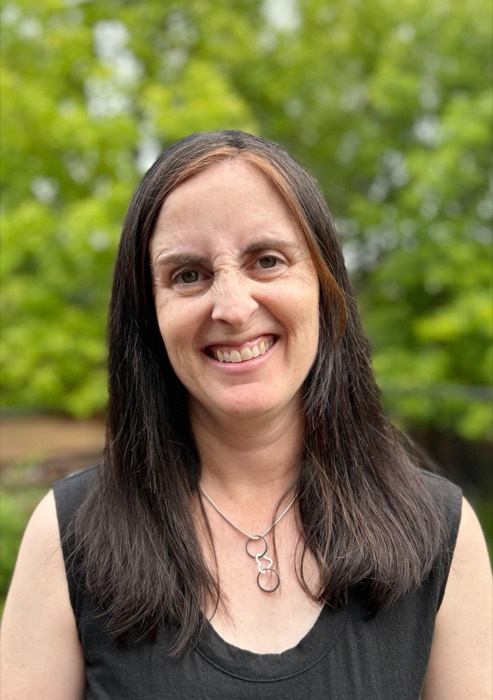
Chae Clark
Lead Developer
Builds the WordPress environment and the API integrations, so the architecture holds up as {{Client}} grows.

Project management
How we'll work together
Kim is your day-to-day contact. Regular working sessions (weekly or biweekly, your preference), a shared project plan, and a live status board keep everyone aligned across all three organizations. You'll always know where hours and budget stand, and scope questions get flagged as they come up rather than at invoice time.
Maiya leads all technical and web architecture decisions, and Karen is your point on everything Salesforce. Jen is executive sponsor and stays close to the engagement, and Stephanie checks in regularly on the account to make sure your team has what it needs.
10 Project estimate & timeline
All figures below are estimates based on our reading of the RFP scope as written. Our estimates are honest, and they account for realistic review cycles, content and technical spec development time, and the decisions that genuinely get made during discovery: the data architecture, the approach to the DAM and {{data layer}}, and how your properties share information.
We have set a not-to-exceed above the working estimate so there is room to build the {{data layer}} as we learn what it needs to do, without a change order every time we learn something. You will always know where hours and budget stand. If needed, we are glad to discuss a phased approach or scope adjustments in discovery to keep this within {{Client}}'s budget.
One-time implementation
| Workstream | Timing | Est. cost |
|---|---|---|
| Phase 01 · Discovery, configuration & data architecture | {{Mon–Mon YYYY}} | {{$00,000}} |
| Phase 02 · UX, brand application & design system | {{Mon–Mon YYYY}} | {{$00,000}} |
| Phase 03 · Website build, {{data layer}} & integrations | {{Mon–Mon YYYY}} | {{$00,000}} |
| Phase 04 · Migration, QA, training, launch & post-launch support | {{Mon–Mon YYYY}} | {{$00,000}} |
| Project management, across all phases | included above | |
| Staff training, roughly {{20}} EN users in tiered sessions | Phase 04 | {{$0,000}} |
| {{System ↔ System}} connector | {{$00,000}} | |
| Working estimate | {{Mon YYYY–Mon YYYY}} | ~{{$000,000}} |
| Not-to-exceed, data platform & integrations scoped in discovery | {{$000,000}} |
Included at launch: Firefly's 30-day post-launch technical support. The monthly support retainers below cover the months after that.
Ongoing & training (separate scope)
| Item | Cadence | Est. cost |
|---|---|---|
| WordPress hosting (WP Engine or Pantheon) | Annual | {{$0,000}}–{{$0,000}} |
| Semantic search platform | Annual | {{$0,000}}–{{$0,000}} |
| Security, SSL & monitoring | Annual | {{$000}}–{{$0,000}} |
| Data & asset platform license | Annual | pending vendor selection |
| Engaging Networks license | Annual | TBD |
| Website + {{data layer}} maintenance & support retainer (Firefly) | Monthly | Starts at {{$0,000}}/mo |
| {{platform}} + {{CRM}} support retainer | Monthly | Starts at {{$0,000}}/mo |
| Staff training beyond launch | As needed | TBD |
11 Optional services
Additional Services
Optional Services: ongoing strategy & platform growth
Standing up this type of tech stack is a significant investment, and getting full value from it takes time and intention. The {{data layer}} will grow as {{Client}} is ready to connect more to it. {{Engagement platform}} Networks has capabilities your team will want to explore as you get comfortable with it. And the new infrastructure opens up marketing and fundraising possibilities that didn't exist before.
Beyond the core engagement, we're available to stay on as strategic and technical partners as the work evolves. This could mean supporting marketing and fundraising campaigns built on the new infrastructure, building out donor journeys and email nurturing sequences in Engaging Networks, or picking up the {{data layer}} roadmap as new connections to Airtable, Qualtrics, and other systems get phased in.
These services are scoped separately and none of them need to be decided now. They're here so you know we're committed to helping you get it right over time.
12 {{Client}} staff involvement
What we need from your team
The RFP asks for estimated hours from your staff by phase. These are the weekly loads we would plan around, heaviest during the Phase 01 workshops and again through migration and training, and they assume {{Client}} wants to be closely involved in the decisions rather than handed a result at the end.
| Phase | What we need | Timing | Hours (across all roles) |
|---|---|---|---|
| Phase 01 · Discovery & configuration | Workshops, stakeholder sessions, back-end access, timely approvals | {{Mon–Mon YYYY}} | {{X–Y hrs/wk}} |
| Phase 02 · UX & brand application | Wireframe and design reviews, approvals, feedback | {{Mon–Mon YYYY}} | {{X–Y hrs/wk}} |
| Phase 03 · Website build & integration | Testing, user acceptance testing, stakeholder reviews | {{Mon–Mon YYYY}} | {{X–Y hrs/wk}} |
| Phase 04 · Migration, QA, training & launch | Migration support, UAT, training sessions | {{Mon–Mon YYYY}} | {{X–Y hrs/wk}} |
Client success stories
References
Each of these is a comparable technical engagement: an Engaging Networks implementation, a large content archive migration, a nonprofit digital ecosystem rebuild, or a website build in progress. All of them are happy to speak to how we work.
Sarah Burke
Director of Marketing, Southern Poverty Law Center
Engaging Networks implementation & data migration
sarah.burke@splcenter.org
Natalie Widel
Director of Digital Marketing, Population Connection
Website rebuild & ongoing search optimization
nwidel@populationconnection.org
Cathy Renna
Director of Communications, National LGBTQ Task Force
Digital ecosystem optimization
crenna@thetaskforce.org
Paulo Vergara
Exec. VP of Marketing and Development, SF Zoo
Website build (pre-launch)
PauloV@sfzoo.org · 415.753.7286
13 Why us. Why now.
{{name what they have outgrown — the separate systems that carried the work this far and are now the thing slowing it down — then reframe the project accordingly.}}
{{return to the reframe from section 02 and land it: what the foundation gives them, what is still decided in discovery, and why this team is the one to run it.}}
We would love to build this with you.